AI Spanish Tutor: How It Works and Who It Actually Helps
What an AI Spanish tutor can and can't do, how voice conversations work, and how to use one to finally start speaking Spanish out loud.
By Ayoub Farid · · 4 min read
Most people who "study Spanish" spend almost all of their time reading, tapping and listening. Then the moment comes to actually say something, and the words are gone. An AI Spanish tutor is built to fix exactly that gap: it gives you someone to talk to, out loud, whenever you have ten free minutes.
This guide explains what an AI Spanish tutor is, what it does well, where it falls short, and how to get real speaking progress out of one.
What is an AI Spanish tutor?
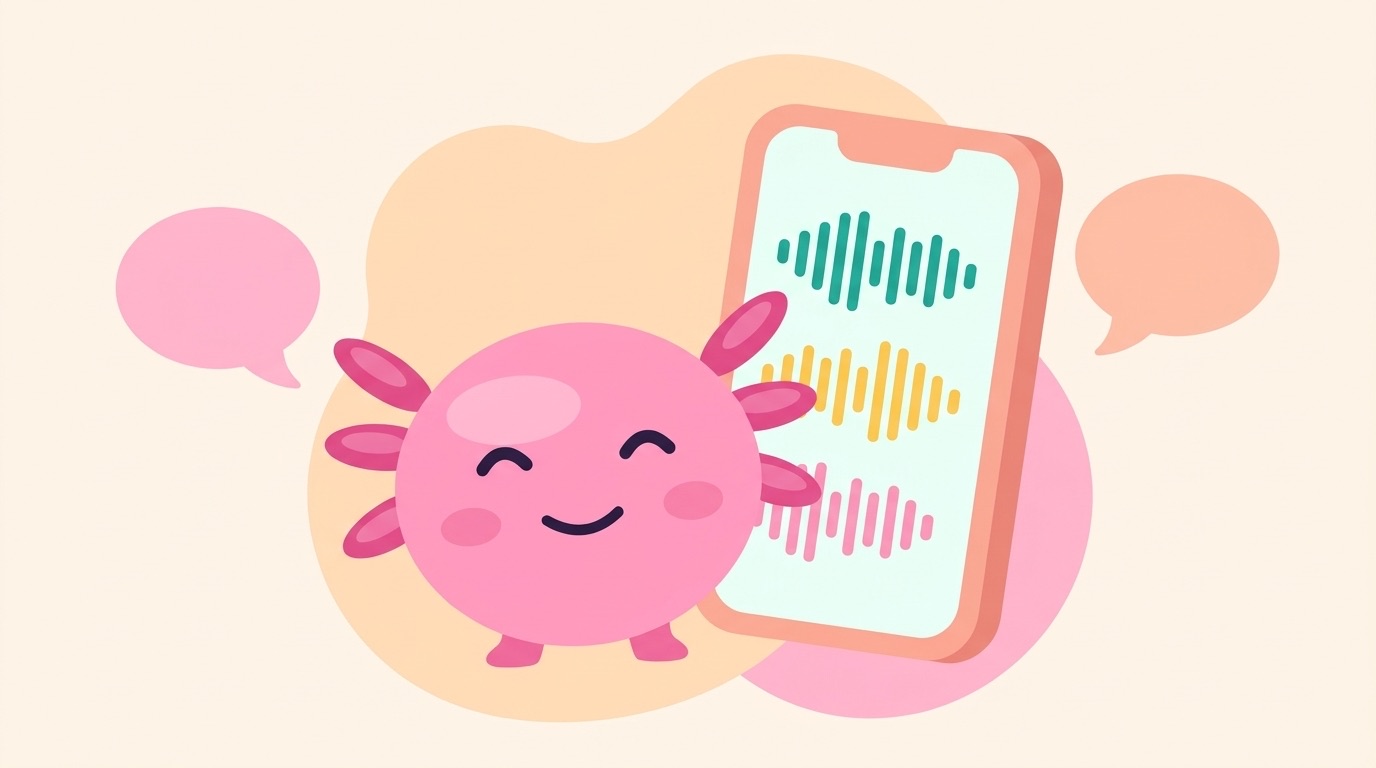
An AI Spanish tutor is an app that holds a spoken or written conversation with you in Spanish, adapts to your level and gives you feedback. The newer generation works by voice in real time: you talk, it listens, it answers with a natural voice, and the conversation keeps going like a phone call.
The good ones do three things a textbook can't:
- They make you produce Spanish. You can't passively scroll through a conversation. You have to answer.
- They adapt. A beginner gets short, slow sentences. An intermediate learner gets follow-up questions and more natural speed.
- They never get tired or judge you. You can repeat the same café order fifty times, and nobody sighs.
How a voice conversation with an AI tutor works
A typical session looks like this:
- You pick a situation, such as ordering at a café, chatting with a grandparent or asking for directions.
- The tutor plays a role, like the barista or the grandmother, and opens the conversation.
- You answer out loud. Speech recognition turns your voice into text, and you usually see a live transcript.
- The tutor responds in context, keeping the conversation moving instead of stopping to lecture you.
- You get feedback, either as small correction cards during the chat or as a summary afterwards.
That last part matters more than it seems. Being corrected mid-sentence is one of the main reasons people freeze. Tutors that save corrections for a card or a summary keep you talking.
What an AI tutor does well
Unlimited low-pressure repetition
Speaking is a motor skill as much as a knowledge skill. Your mouth needs reps. An AI partner gives you those reps without the social cost of making a stranger wait for you.
Practice for specific moments
Want to rehearse a call with your partner's parents, or a doctor visit before a trip? You can practice that exact situation. This is called task-based practice, and it transfers well to real life because you are rehearsing the real thing.
Feedback you can act on
A good tutor won't just say "wrong". It shows a more natural way to say what you meant. For example, a learner who says "Yo tengo veinte pesos" might be shown "Solo tengo veinte pesos", with a note that Spanish usually drops yo because the verb already shows who is speaking.
What an AI tutor can't do (yet)
Be honest with yourself about the limits:
- It isn't a cultural insider. It can teach local words, but it hasn't lived in Oaxaca or Sevilla.
- Speech recognition isn't perfect. Strong accents, mumbling or background noise can cause misunderstandings. Speak clearly in a quiet room.
- It won't replace real people. The goal is to make your real conversations easier, not to avoid them.
Think of an AI tutor as a flight simulator: you still fly the real plane, but you crash a lot less.
Who benefits most
- People who understand Spanish but freeze when speaking, including many heritage speakers.
- Travelers who want to rehearse travel Spanish phrases before a trip.
- Busy adults who can't schedule classes but can find 10 to 15 minutes a day.
- Shy learners who need confidence before they talk to people.
How to get the most out of an AI Spanish tutor
- Talk every day, briefly. Ten minutes daily beats one hour on Sunday.
- Repeat situations. Do the same café scenario three days in a row. The third time, you'll notice you're faster.
- Read your corrections, then reuse them. In your next call, deliberately use the corrected phrase.
- Don't switch to English. If you're stuck, describe the word: "la cosa para abrir la puerta" (the thing to open the door).
- Raise the difficulty. When a situation feels easy, ask more questions or move to a harder one.
Try it with Lolo
Lolo is an AI Spanish tutor app for iPhone and iPad built around speaking. Lolo, a friendly axolotl, calls you in real situations: ordering at a café in Mexico City, a call with abuela, finding the metro in Madrid, a doctor visit or a free chat. You see a live transcript, corrections appear as gentle cards, and after each call you get a summary with natural ways to say what you meant and the new words you used. Start with our guide to practicing Spanish with AI or compare options in the best apps to practice speaking Spanish.
Frequently asked questions
Can an AI tutor really teach me to speak Spanish?
It can give you the speaking practice most learners never get, which is the missing piece for many people. Combine it with listening to real Spanish and talking to real people.
Is an AI Spanish tutor good for beginners?
Yes, if it adapts to your level. Beginners should start with simple, predictable situations like ordering food or introducing themselves.
How long should I practice each day?
Ten to fifteen minutes of real speaking a day is enough to see progress within a few weeks, as long as you stay consistent.